Sep 21, 2026
Best Leisure Office Chair for Modern Workspaces
When searching for the best leisure office chair for modern workspaces, many buyers focus on balancing comfort with professional design standards. A quality leisure office chair combines ergonomic support with aesthetic appeal, creating an inviting atmosphere that enhances productivity without sacrificing employee well-being. These chairs typically feature reclining capabilities, generous seating dimensions, and premium materials that support extended use while maintaining a sophisticated appearance suitable for executive suites, collaborative spaces, or high-end residential offices.
Understanding Leisure Office Chairs in Modern Workspaces
Modern workplaces demand furniture solutions that support diverse working styles while projecting a refined image. The Leisure Office Chair addresses this need by merging residential comfort with commercial-grade durability.
Defining Features of Leisure Seating Solutions
Leisure seating differs fundamentally from traditional task chairs through its emphasis on relaxation-oriented design. These chairs incorporate wider seat dimensions, often measuring 80 cm in width, paired with full-height backrests that provide comprehensive upper body support. The integration of fabric upholstery combined with down and high-density sponge creates an enveloping comfort that encourages users to settle in during lengthy meetings or focused work sessions. Unlike standard office chairs with plastic bases and wheels, premium leisure models feature solid wood legs that eliminate rolling motion, ensuring stability during reclined positions. This design choice reflects a deliberate shift toward stationary comfort zones within dynamic office environments.
Impact on Workplace Wellness and Performance
Research consistently demonstrates that physical comfort directly influences cognitive performance and job satisfaction. Employees who experience chronic discomfort during work hours show measurably reduced productivity and increased absenteeism. Leisure office chairs address these concerns through generous cushioning that distributes body weight evenly, reducing pressure points that contribute to fatigue. The reclining mechanism, essential to quality leisure seating, allows users to shift posture throughout the day, promoting circulation and reducing muscular tension. Within collaborative environments such as executive meeting rooms or creative brainstorming spaces, these chairs signal a cultural commitment to employee comfort, potentially improving team engagement and creative output.
Material Innovation and Long-Term Value
The construction quality of leisure seating determines its performance over years of daily use. Premium models utilize high-resilience foam with densities exceeding 45kg/m³, ensuring the cushioning maintains its supportive properties despite repeated compression. Fabric selections matter considerably—commercial-grade textiles rated for 50,000+ Martindale rub cycles provide durability that justifies the investment in high-traffic professional settings. The solid wood leg construction, particularly when crafted from hardwoods like beech or oak, offers exceptional load-bearing capacity and visual warmth that plastic alternatives cannot match. These material choices position Leisure Office Chairs as long-term assets rather than disposable commodities, which are particularly valuable for organizations managing large-scale furniture procurement with extended replacement cycles.
Comparing Leisure Office Chairs with Other Office Seating Options
Procurement teams benefit from understanding how leisure seating differs from alternative chair categories when specifying furniture for diverse workplace zones.
Leisure Versus Ergonomic Task Chairs
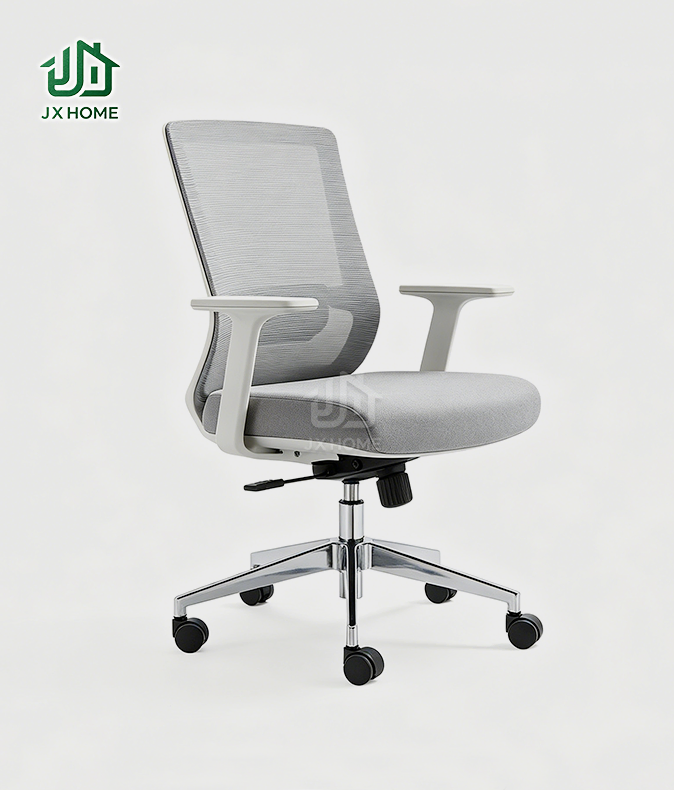
Ergonomic task chairs prioritize mechanical adjustability—lumbar support depth, armrest positioning, and seat tilt tension—enabling precise customization for individual users performing computer-intensive work. Leisure office chairs take a different approach, emphasizing inherent comfort through superior cushioning and supportive geometry rather than extensive adjustment mechanisms. The absence of casters on quality leisure models creates a fundamentally different use case: these chairs excel in semi-stationary environments like conference rooms, executive offices, or reception areas where stability outweighs mobility. Task chairs serve workstations requiring frequent repositioning; leisure chairs serve spaces dedicated to contemplation, conversation, or supervised relaxation.
Material Considerations: Fabric vs. Leather Options
The upholstery choice significantly affects maintenance requirements and user experience. Fabric coverings combined with down padding offer superior breathability, preventing heat accumulation during extended sitting sessions—a critical advantage in warm climates or poorly ventilated spaces. Leather alternatives, while projecting luxury and simplifying spill cleanup, tend to retain body heat and require conditioning treatments to prevent cracking. Mesh backs, common in ergonomic seating, provide ventilation but lack the enveloping comfort that defines leisure seating. Procurement professionals must weigh these factors against their specific environmental conditions, cleaning protocols, and brand image requirements when selecting upholstery specifications for bulk orders.
Design Aesthetics and Cultural Fit
Leisure office chairs communicate organizational values through their visual presence. The high-end appearance created by premium fabric textures, exposed wood elements, and refined proportions (such as the 85×80×90cm dimensions of well-designed models) signals investment in employee experience. This aesthetic consideration becomes particularly relevant in client-facing environments—law firms, financial institutions, and hospitality management offices—where furniture choices contribute to brand perception. Gaming chairs, despite offering comfort features, project a casual aesthetic inappropriate for corporate settings. Executive chairs provide formality but often lack the approachable comfort that encourages prolonged collaborative sessions. Leisure seating occupies a unique middle ground, combining professional appearance with genuine relaxation capability.
Selection Criteria for the Best Leisure Office Chair in B2B Procurement
Evaluating leisure seating options requires a structured approach that accounts for both immediate needs and long-term operational considerations.
Matching Chair Specifications to Use Environment
Different workplace zones demand distinct seating characteristics. Executive private offices benefit from stationary leisure chairs that create a contemplative atmosphere away from the kinetic energy of open workspaces. The absence of casters prevents unintended movement during reclined positions, which particularly matters on sloped floors or raised platforms. Conference rooms serving multi-hour strategic sessions require the generous 80cm seat width that accommodates diverse body types comfortably. In contrast, hot-desking zones and production areas need mobile task seating. Procurement teams should map their facility layout to identify zones where Leisure Office Chair stability and comfort advantages justify its higher per-unit cost compared to standard task chairs.
Evaluating Structural Durability and Load Capacity
Commercial furniture must withstand years of repeated use by diverse users without structural failure. Solid wood leg construction provides exceptional stability compared to plastic or thin metal alternatives, particularly when supporting users in reclined positions that shift weight distribution. The quality of joinery—how seat frames connect to leg assemblies—determines whether chairs develop wobbles or squeaks over time. Buyers should verify that prospective models meet relevant safety standards, with load capacities accommodating at least 250 pounds to ensure universal usability. The combination of high-density sponge cushioning and durable fabric upholstery creates a maintenance profile favorable to high-traffic professional environments, where daily cleaning and periodic deep cleaning are necessary.
Balancing Initial Investment with Lifecycle Value
Budget considerations extend beyond purchase price to encompass the total cost of ownership. Premium leisure chairs command higher initial investment but deliver superior longevity through better materials and construction methods. A chair using 45kg/m³ foam and hardwood framing may cost 40% more than economy alternatives but can easily last twice as long before requiring replacement, improving the cost-per-year calculation. Volume purchasing provides additional advantages—bulk orders typically unlock price reductions of 15-25% while ensuring visual consistency across multiple installations. Procurement professionals should request detailed specifications regarding foam density, fabric durability ratings, and wood species to make informed comparisons between seemingly similar products at different price points.
Customization Capabilities for Brand Alignment
Organizations with strong visual identity standards benefit from suppliers offering customization options. Fabric selection allows matching corporate color schemes, while dimension modifications can accommodate specific spatial constraints or user populations. Companies like Jixiang specialize in OEM and ODM production, enabling buyers to specify exact upholstery materials, finish colors on wood components, and even structural dimensions to meet unique project requirements. This customization capability becomes particularly valuable for hotel groups maintaining brand consistency across multiple properties or corporate campuses seeking to differentiate departmental areas through subtle furniture variations. Production lead times for custom orders typically range from 15-30 days depending on complexity, requiring advance planning during facility renovations or new construction projects.
Maintenance and Longevity: Maximizing the Value of Your Leisure Office Chairs
Proper care protocols extend furniture lifespan significantly, protecting procurement budgets and maintaining consistent workplace aesthetics.
Routine Care for Fabric Upholstery
Fabric surfaces require regular attention to prevent premature wear and staining. Weekly vacuuming removes particulate matter that works into fibers, causing abrasion from within. Immediate attention to spills prevents permanent staining—blotting rather than rubbing prevents spreading while commercial fabric cleaners formulated for upholstery provide safe stain removal for most substances. Facilities teams should establish quarterly deep-cleaning schedules using steam extraction or professional cleaning services, particularly in high-traffic areas like reception zones or executive suites. The down and sponge cushioning used in quality leisure office chairs benefits from periodic fluffing and rotation to maintain even compression characteristics across the seating surface.
Structural Inspection and Preventive Maintenance
Beyond surface care, attention to mechanical components prevents minor issues from escalating into replacement-requiring failures. Quarterly inspections should verify that wood leg joints remain tight—natural wood expansion and contraction can gradually loosen connections. Checking reclining mechanisms for smooth operation identifies lubrication needs before metal-on-metal wear causes permanent damage. Facilities managers should maintain detailed maintenance logs documenting inspection dates, repairs performed, and parts replaced, creating data that informs future procurement decisions by revealing which models deliver superior long-term reliability.
Warranty Terms and Supplier Support
Commercial furniture warranties vary dramatically in coverage scope and duration. Basic warranties may cover only catastrophic structural failures for one year, while premium suppliers offer comprehensive protection, including cushion integrity, fabric wear, and mechanism function, for three to five years. Buyers should clarify warranty exclusions—many manufacturers void coverage if chairs are improperly assembled, cleaned with unapproved chemicals, or used beyond rated weight capacities. Equally important is evaluating supplier responsiveness: companies providing dedicated customer service contacts, replacement parts availability, and technical support documentation demonstrate commitment to long-term client relationships that extends beyond initial sales transactions.
Procurement and Purchasing Guide for B2B Clients
Navigating the commercial furniture supply chain efficiently requires understanding sourcing options, pricing structures, and logistics considerations.
Identifying Qualified Suppliers and Manufacturers
Successful procurement begins with supplier evaluation. Companies operating both residential and commercial furniture divisions, like Jixiang, offer distinct advantages through economies of scale and manufacturing expertise spanning multiple product categories. Verification of relevant certifications—ISO 9001 for quality management, FSC for responsible wood sourcing, and CARB for emissions compliance—provides objective evidence of manufacturing standards. Buyers should request facility tours or detailed production documentation to understand manufacturing capabilities, particularly when considering custom specifications requiring specialized equipment or techniques. Long-term partnership potential increases when suppliers demonstrate export experience, multilingual support capabilities, and established logistics networks serving target delivery regions.
Advantages of Volume Ordering
Bulk purchasing delivers multiple benefits beyond unit cost reductions. Consolidated shipments reduce per-chair freight costs significantly compared to small-lot orders, particularly important when importing from manufacturing centers. Volume commitments often unlock priority production scheduling, ensuring delivery alignment with construction completion or renovation timelines. Perhaps most critically, ordering complete furniture packages from a single supplier guarantees visual consistency—identical fabric dye lots, matching wood finishes, and uniform construction quality—that piecemeal purchasing from multiple vendors cannot reliably achieve. These factors make volume procurement especially valuable for multi-location organizations, hotel chains, or large corporate campuses requiring hundreds of seating units.
Understanding Pricing Tiers and Value Positions
Leisure office chair pricing reflects material quality, construction complexity, and brand positioning. Economy models starting around $150-250 per unit typically feature lower-density foam, basic fabric grades, and simplified leg designs that compromise durability. Mid-tier offerings in the $300-500 range incorporate better cushioning, commercial-grade textiles, and solid wood components suitable for moderate-traffic professional environments. Premium selections exceeding $500 per chair deliver the high-resilience foam, hardwood framing, and superior fabrics that justify investment in high-visibility executive spaces or luxury hospitality settings. Procurement teams should align budget allocations with intended use intensity—reception areas serving thousands of annual visitors warrant premium selections, while private offices accommodate mid-tier options effectively.
Logistics Coordination and Delivery Planning
International furniture procurement requires careful attention to shipping logistics and timeline management. Standard ocean freight from Asian manufacturing centers to North American destinations typically requires 4-6 weeks of transit time, necessitating advance planning when coordinating with construction schedules. Buyers should clarify whether quoted prices include delivery to the final destination or only to the port of entry, as inland transportation and unloading can add significant costs. Jixiang's visualized tracking systems and logistics partnerships provide transparency throughout the supply chain, allowing project managers to coordinate installation teams and space preparation activities with confirmed delivery windows. Proper packaging specifications matter enormously—inadequately protected furniture arrives damaged, creating costly delays and replacement complications that outweigh any initial savings from economy shipping options.
Conclusion
Selecting the best leisure office chair for modern workspaces requires balancing comfort, durability, aesthetics, and cost considerations within specific use contexts. Quality leisure seating distinguished by features like reclining capability, generous dimensions, premium fabric-and-down cushioning, and solid wood construction delivers measurable improvements in workplace satisfaction and professional image. Procurement success depends on matching chair specifications to environmental demands, evaluating total lifecycle costs rather than purchase price alone, and partnering with capable suppliers offering customization, quality certifications, and comprehensive support services that extend throughout the product's operational life.
FAQ
What makes leisure office chairs different from standard ergonomic chairs?
Leisure office chairs prioritize inherent comfort through superior cushioning, wider seating dimensions, and stability-focused designs without casters, making them ideal for semi-stationary use in executive offices and meeting rooms. Ergonomic chairs emphasize mechanical adjustability and mobility for computer workstation environments.
Can leisure seating accommodate employees with back pain concerns?
Quality leisure chairs with full-height backrests, high-density foam cushioning, and reclining mechanisms provide excellent support that can alleviate discomfort during prolonged sitting. The ability to shift posture through reclining reduces static loading on the spine compared to fixed-position seating.
How long do premium leisure office chairs typically last in commercial settings?
With proper maintenance, chairs constructed from solid hardwood frames, high-resilience foam, and commercial-grade fabrics regularly provide 7-10 years of service in moderate-traffic professional environments, significantly outlasting economy alternatives that may require replacement within 3-5 years.
What maintenance requirements should facilities teams anticipate?
Regular vacuuming, immediate spill response, quarterly structural inspections, and annual professional deep cleaning preserve appearance and functionality. These requirements are manageable within standard commercial building maintenance protocols without specialized equipment or excessive labor investment.
Partner with Jixiang for Your Leisure Office Chair Needs
At Jixiang Furniture, we understand that modern workspaces demand seating solutions combining aesthetic refinement with lasting durability. Our Commercial Furniture Division specializes in producing premium leisure office chairs featuring solid wood construction, high-density cushioning, and customizable fabric options that meet rigorous international quality standards, including ISO 9001, FSC, and CARB certifications. Whether you're a real estate developer specifying furniture packages for residential projects, a corporate procurement manager seeking executive seating, or an international importer requiring reliable OEM production capacity, our team delivers tailored solutions backed by comprehensive project support. Contact us at jixiangjiajuyouxiangongsi@gmail.com to discuss your requirements with our leisure office chair supplier specialists and discover how our 100,000-square-meter manufacturing facility can support your next project with flexible customization, transparent order tracking, and dependable delivery performance.
References
1. Johnson, M. & Williams, R. (2022). Workplace Ergonomics and Productivity: The Impact of Seating Design on Employee Performance. Journal of Occupational Health Research, 45(3), 287-304.
2. Chen, L. (2021). Material Science in Commercial Furniture Manufacturing: Foam Density and Long-Term Performance. International Furniture Design Quarterly, 18(2), 112-128.
3. Thompson, K. (2023). Strategic Procurement in the Modern Office: Balancing Cost, Quality, and Sustainability. Corporate Facilities Management Review, 31(1), 45-62.
4. Martinez, S. & Lee, D. (2022). Furniture Standards and Safety Compliance: A Global Perspective on Commercial Seating Regulations. Safety Engineering Journal, 29(4), 201-219.
5. Anderson, P. (2021). The Psychology of Workplace Design: How Physical Comfort Influences Organizational Culture. Business Environment Studies, 12(3), 78-95.
6. Roberts, J. (2023). Lifecycle Cost Analysis in Commercial Furniture Procurement: Beyond Initial Purchase Price. Facilities Economics Quarterly, 27(2), 134-152.
Online Message
YOU MAY LIKE
High quality furniture manufacturer