Sep 21, 2026
How to choose the right task chairs for your office in 2026?
In 2026, one of the most important decisions procurement managers have to make is how to set up the seats in their offices. Quality Employee Office Chairs of a High Quality Have a Direct Impact on Productivity, Employee Health, and Operating Costs. Modern workplaces need chairs that can accommodate a variety of body types, long periods of sitting, and mixed work routines. This detailed guide goes over important selection criteria, material concerns, new innovations, and buying strategies that will help people in charge make smart investments in comfortable seating solutions that meet the needs of today's offices and prioritize employee health.
Understanding the Core Needs for Employee Office Chairs
Identifying Workplace Requirements
Based on how things are done, each office has its own specific sitting needs. Task chairs need to be able to handle all of these different ways of using them, whether your team works eight-hour shifts, switches between standing desks, or has a mixed plan. Looking at the duties of the job can help you figure out what features are needed. For example, people who do data entry need different back support than creative workers who move around a lot during the day.
Ergonomic Benefits vs. Traditional Seating
Research shows over and over that ergonomic sitting cuts down on joint problems by about 60% compared to regular chairs. Proper lumbar position keeps back pain from happening, and movable features help blood flow when you're sitting for long amounts of time. These changes in health have measured business effects, such as fewer employees calling out sick and more focused workers during busy times.
Common Challenges in Chair Selection
A lot of buying teams keep running into the same problems: chairs that break down quickly after just a few uses, standard designs that don't work for people of different body types, and not enough adjustability that forces them to make uncomfortable choices. If you spot these problems early on, you can avoid expensive repairs and unhappy customers. Companies often don't think about the total costs of ownership because they only look at the original purchase price and not the value over time or the amount of upkeep that needs to be done.
Key Criteria to Evaluate When Choosing Employee Task Chairs
Ergonomic Adjustability Features
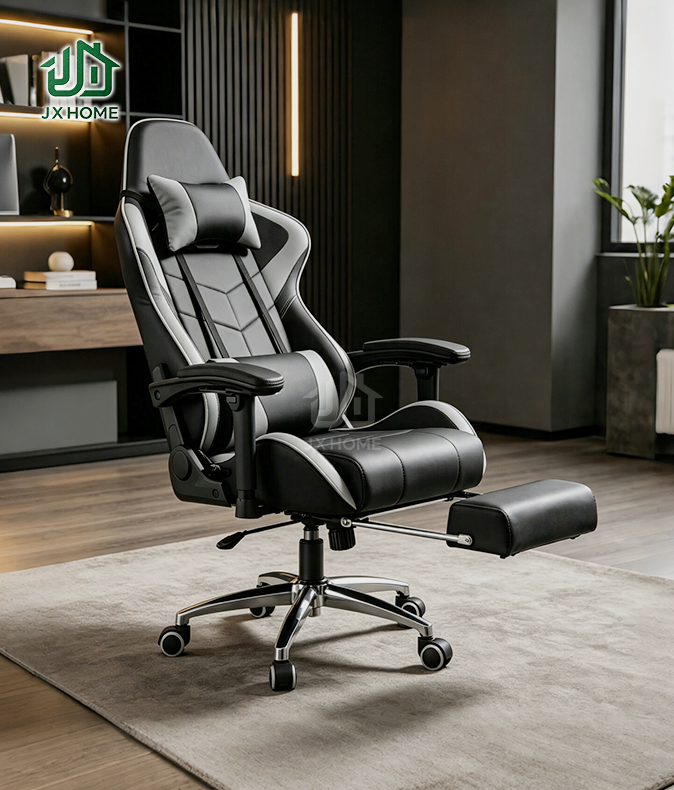
To be useful for all kinds of people, employee office chairs need to have more than one adjustment point. Gas springs that can be adjusted in height give people between 155 cm and 195 cm of height options. Three-dimensional handles give your shoulders and forearms important support. They can be adjusted in height, width, and angle to keep your nerves from getting pinched. Backrest tilt devices that can be locked in place let users switch between a straight-up work position and a relaxed recline angle of up to 135 degrees, which lowers spine pressure throughout the workday.
Material Selection and Durability
Materials have a big effect on how long a chair lasts and how comfortable it is to sit in. Backrests made of breathable mesh that are 48 cm wide and 70 cm high help air flow, which keeps you cool in the summer or in climate-controlled spaces. High-density foam seats with a density of 50 to 60 kg/m³ keep their shape for years, while cheaper options break down after just a few months. Heavy-duty fabric bases that can hold up to 150 kg make the structure reliable for people of different weights, and the smooth-rolling feet make it easy to move around.
Budget and Long-Term Value Analysis
The prices of the initial purchase are only one part of figuring out the total cost of ownership. High-end adjustable seating that costs between $300 and $800 per unit usually lasts 8 to 10 years, while cheaper options need to be replaced every two to three years. When buying in bulk for businesses with 50 or more workers, getting longer warranties and maintenance plans can often cut the cost per unit by 15 to 25 percent. Healthcare cost prevention should be a part of financial planning, since proper sitting stops costly workers' compensation claims.
Supplier Reliability and Certification Standards
Reputable makers keep certificates like BIFMA X5.1, which proves that chairs can survive wear tests of 100,000 cycles or more and meet weight requirements. The ISO 9001 Quality Management certification shows that production standards are always met, and the FSC and CARB certifications show that the company is environmentally responsible when it comes to finding materials. Building connections with makers that offer OEM/ODM customization is helpful when operations need to grow or when a certain look needs to be integrated.
Comparing Popular Types of Employee Office Chairs in 2026
Ergonomic vs. Traditional Design Approaches
Synchro-tilt systems in modern employee office chairs change the angles of the backrest and seat in a proportional way, keeping users in the best ergonomic position throughout all recline ranges. This is very different from standard chairs with fixed angles, which cause people to stay in one position. Because no two backs are the same shape, more advanced models have lumbar support that can be adjusted to fit each person's spinal curves. Within 6 to 12 months, fewer reports of pain show that the health investment was worthwhile.
Material Comparisons: Mesh, Fabric, and Leather
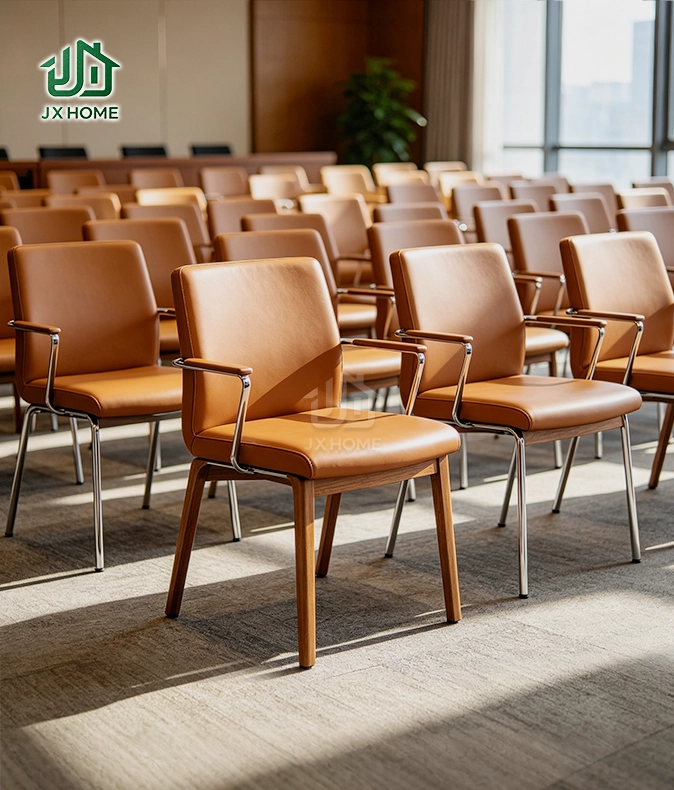
Mesh construction works best in humid places and buildings with changing temperatures because it lets air flow better and keeps people comfy while they sit for long periods of time. Fabric Employee Office Chairs provide warmth in cooler environments and are available in a wide range of colors to support workplace branding. Leather looks good on executives, but it needs to be conditioned regularly to keep it from cracking. The buying team should choose materials whose properties are right for each area of the office. For example, mesh should be used for general workspaces, leather for senior rooms, and fabric for conference seating.
Essential Feature Analysis
The most important feature is the lumbar support system. Mechanisms that can be adjusted work better than set designs because they can fit people with different body lengths. Changing the seat level keeps blood flow from getting slowed down behind the knees, which is especially important for shorter users. Five-star swivel bases that can rotate 360 degrees make it easy to move between panels or work areas without sacrificing comfort. Gas spring systems that meet SGS safety standards keep catastrophic breakdowns from happening, which can happen with parts that aren't up to par.
Brand Positioning and Manufacturer Options
The market respects high-end makers like Herman Miller and Steelcase because they have done ergonomic study for decades and offer warranties that people can trust. Mid-tier makers, like Jixiang Furniture, can meet similar technical requirements while saving 40 to 60 percent on costs by using more efficient production methods and direct purchasing relationships. When looking at manufacturers for large orders, check their production capacity to make sure shipping times work with project plans. Facilities that make 600,000 or more units a year show they can reliably scale up.
Practical Considerations for Procurement and Maintenance
Lifecycle Maintenance Strategies
Conducting inspections of employee office chairs every three months can significantly extend their service life. By making sure the casters work, fixing the base connections, and greasing the adjustment mechanisms, you can keep small problems from getting worse and needing to be replaced. Setting up cleaning plans that are right for the type of material helps keep things looking professional and stops them from wearing out too quickly. When an organization buys more than 100 chairs, it can get care contracts that cover regular cleaning without putting too much pressure on its own facilities teams.
Bulk Procurement Negotiation Tactics
When handled carefully, buying in bulk can lead to big savings on costs. Orders over 50 units usually get discounts of 12 to 18%, and pledges over 200 units may get discounts of 25%. By negotiating phased delivery plans that work with the timelines for office growth, storage problems can be avoided. When you buy in bulk, warranty terms become flexible. Pushing for 5-year coverage instead of the standard 3-year terms saves your long-term investment. When you place a big order, you can often get customization choices like branded colors or name embroidery for no extra cost.
Sourcing Channels and Supplier Relationships
Direct partnerships with the employee office Chair manufacturers provide the greatest flexibility and best value, particularly for organizations with ongoing furniture requirements. B2B sites make it easy to compare prices, but they may not offer enough customizable options. Regional wholesalers offer easy access and reasonable prices, making them perfect for medium-sized orders that need local help. Looking at companies like Jixiang, which has factories that cover 200,000 square meters and are certified to ISO 9001, CE, FSC, and CARB standards, makes sure that there is enough capacity to meet demand and that quality is maintained across big projects.
After-Sales Service Evaluation
Professional sellers are different from transactional vendors because they offer full after-sales help. Remote installation help lowers the cost of rolling out in multiple locations, and quick technical support answers questions about adjustments that keep users from getting frustrated. Whether small component failures need a whole new chair or just easy repairs depends on how readily available substitute parts are. Return policies that allow for fair trial periods show suppliers that you trust them and protect buying investments from mismatched specifications.
Future Trends and Innovations in Employee Task Chairs for 2026
Smart Seating Technology Integration
New chairs with sensors track how long you sit and how straight your back is, sending you real-time alerts to get up and move around. Data analytics platforms help facility managers figure out how to best assign furniture to people with flexible work plans by showing them how it is being used. When you connect your chair to Bluetooth, it can create personalized adjustment profiles that set up the chair automatically as you move between workspaces. This way, you don't have to make changes every day, and your posture stays the same.
Sustainability and caring for the environment
More and more, corporate social responsibility programs affect choices about what to buy. Environmental, social, and government reporting standards can be met by chairs made from recycled materials and low-emission production methods. Long-term environmental effects are lessened by modular designs that let parts be replaced instead of being thrown away completely. Suppliers that offer programs to take back used furniture show they care about the cycle economy, which makes them attractive to businesses that want to reduce their waste.
Adaptive Seating for Hybrid Workplaces
Modern employee office chairs support flexible workplace models by enabling smooth transitions between focused individual work and collaborative activities. Designs that are 12 to 14 kg light make it easy to move without compromising the structure's strength. In hot-desking settings, quick-adjust devices let multiple daily users change the height and position of the armrests without using any tools. Aesthetic flexibility through color choices like black, gray, and blue provides a consistent look even when users and departments have different tastes.
Wellness-Focused Design Philosophy
As part of the workplace wellness trend, chairs are being seen as more than just a useful necessity. Designs that encourage small moves on dynamic surfaces work the core muscles, which counteracts the negative effects of being idle. Chairs that can lean up to 135 degrees and have lockable angles encourage short breaks for rest, which a study has shown improves focus afterward. Integration with standing desk environments helps with sit-to-stand changes, because changing positions is better for your health than staying in one position all the time.
Conclusion
To pick the right task seating for businesses in 2026, you have to think about ergonomics, price, and how workplaces are changing. Quality chairs with movable arms, flexible materials, and strong construction pay for themselves by making employees healthier and reducing the number of times they need to be replaced. Choosing the right provider relies on checking their manufacturing capacity, the reliability of their certifications, and their commitment to customer service after the sale. Companies that put these factors first get sitting options that boost output and show they care about their employees' health and happiness.
FAQ
What ergonomic features matter most for large office deployments?
Focus on back support that can be adjusted, seat depth that can be changed, and multidimensional arms that can fit a range of body types without needing multiple chair models. Height-adjustable devices with a 10 cm range work for people 155 to 195 cm tall, which is 95% of adult communities. Gas springs with safety standards keep things from breaking for weights up to 150 kg, so they can be used by anyone.
How do ergonomic chairs justify their higher initial costs?
Quality ergonomic seats cut the number of joint disorders by 60%, which directly cuts down on workers' compensation claims and sick leave costs. Longer lives (8–10 years vs. 2–3 years for cheaper options) lowers the number of times that they need to be replaced. When employees are more comfortable, they are more productive, usually by 15 to 20 percent more on jobs that require continuous focus.
Can single chair models accommodate diverse employee body types effectively?
Modern Employee Office Chairs with wide ranges of adjustments work well for a variety of work environments. Most people can easily sit on seats that are 48 cm wide and 45 cm deep, and whose height can be adjusted from 48 to 58 cm. Three-dimensional armrest flexibility works for people with different arm and shoulder sizes and lengths. Custom buying requirements may only be needed for things that are very different from the norm when it comes to ergonomics.
Partner with Jixiang for Your Office Seating Solutions
Jixiang Furniture is an expert at making high-quality employee office chairs that meet strict international standards like FSC, BIFMA, and ISO 9001 certifications. Our 100,000-square-meter factory that makes commercial furniture ships more than 600,000 units a year, so we can reliably handle large-scale purchasing projects. Each chair has three-dimensionally movable arms, a breathable mesh construction, and heavy-duty parts that can hold up to 150 kg. It only takes 30 minutes to put together each chair. As a provider of employee office chairs with a lot of experience, we can offer full OEM/ODM customization, low bulk prices, and flexible delivery plans that work with your project's schedule. Email our team at jixiangjiajuyouxiangongsi@gmail.com to talk about your particular needs and get detailed quotes that show how committed we are to quality, value, and the success of our long-term relationship.
References
1. Hedge, A. (2024). Ergonomic Workplace Design: Principles and Applications for Office Seating. Cornell University Department of Design and Environmental Analysis.
2. American Society of Interior Designers. (2025). Commercial Furniture Procurement Standards for Corporate Environments. Washington, D.C.: ASID Publications.
3. Robertson, M., Huang, Y., and Lee, J. (2023). "Impact of Ergonomic Task Chair Features on Employee Productivity and Health Outcomes." Journal of Occupational Health Psychology, 28(4), 412-429.
4. Business and Institutional Furniture Manufacturers Association. (2025). BIFMA e3 Furniture Sustainability Standard: Technical Guide. Grand Rapids, MI: BIFMA.
5. Chen, L. and Martinez, R. (2024). "Total Cost of Ownership Analysis for Commercial Office Seating: A Ten-Year Longitudinal Study." Facilities Management Journal, 42(2), 156-173.
6. International Ergonomics Association. (2025). Global Standards for Workplace Seating Design and Testing Protocols. Geneva: IEA Technical Committee.
Online Message
YOU MAY LIKE
High quality furniture manufacturer