Oct 26, 2026
What Are the Benefits of a 160*24MM Model A Panel?
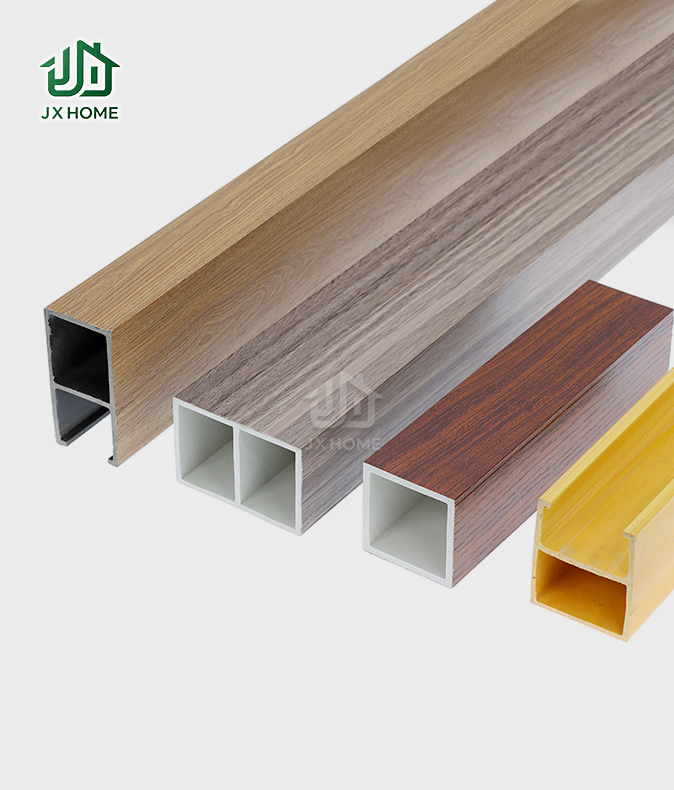
The 160*24MM model A panel is a precision-engineered WPC wall cladding profile built for high-demand interior applications. Measuring 160mm wide and 24mm thick, it combines a PVC-foamed substrate—40% PVC resin, 50% wood powder, 10% additives—with customizable film paper finishes. With ±0.3mm dimensional tolerance, Class B1 fire rating, and Shore D hardness ≥70HD, this panel delivers the structural integrity and visual consistency that large-scale commercial projects require, from airport terminals and transit hubs to shopping centers and corporate lobbies.
Understanding the Core Specifications and Design Features
Before committing to a large-scale wall cladding system, procurement professionals need to make sure that the engineering behind the product can handle stress in the real world. It was made just for those needs that the 160²24MM type A panel was made.
Substrate Composition and Material Engineering
PVC foaming technology is used on the base for integrated molding. The unique mix of 40% PVC resin, 50% wood powder, and 10% special chemicals gives the material a density of 1.2 to 1.4 g/cm³. This ratio makes the panel strong without making it heavier like full wood or metal siding would. Polyvinyl chloride is used instead of standard resin bonds in wood-plastic composite (WPC) technology to hold waste plant fibers together that have more than 58% organic content.
Dimensional Precision and Tolerance Control
Each panel is 160 mm wide and 24 mm thick, with a ±0.3 mm variation in its dimensions. When installing on a big surface, like a wall in an airport building that's hundreds of meters long, this level of accuracy directly controls how visible the joints are and how evenly they are aligned. Before a batch is shipped, it is checked for accuracy by an automated dimensional inspection. If the Delta E value stays below 1.0 between production batches, the color will stay the same whether you order 500 panels today or 5,000 panels six months from now as part of a phased project.
Fire Performance and Certification
The panel has a Class B1 fire rating according to EN 13501-1. This means it meets the fire safety standards for public buildings like transit hubs and shopping centers. Some of the certifications that support this are ISO 9001, CE, FSC, CARB, and BIFMA. These make it easier for the technical approval stage of project audits and owner-operator sign-off.
Benefits of the 160\*24MM Model A Panel in Industrial Applications
Commercial projects that take up a lot of space wear things down every day. The right wall panel needs to be able to handle physical damage, keep out water, and keep its look for decades. Here are the main ways this WPC panel improves performance:
- Impact resistance rated at Shore D hardness ≥70HD, which handles the continuous pedestrian traffic and luggage contact typical in transit environments without surface deformation.
- Flexural strength exceeding 25MPa prevents structural deflection under load, keeping installed walls flat and true over the long service life.
- Water absorption at ≤0.5% per ISO 62, eliminating the swelling and delamination risk that undermines conventional wood cladding in humid zones such as covered walkways and atrium spaces.
- Thermal expansion accommodation built into the tongue-and-groove interlocking system absorbs approximately 1mm of linear movement per meter, preventing gap formation in temperature-variable environments.
- Class B1 fire compliance meets public building safety codes without requiring additional fireproofing treatments that add cost and installation time.
All of these benefits lower the costs of upkeep over the course of the 160*24MM model A panel's life and lower the chance of losing time because of a material failure on a key path milestone. This lower risk directly saves margins for total contractors in charge of airport or train projects.
The layer of film paper adds another useful feature. It can be used for wood grain, stone texture, and modern solid treatments chosen from a standard color chart. It can be applied by cold coating or hot lamination. You can choose from brown, light yellow, white, and cedar white as substrate base tones that match owner-operator marking standards.
160\*24MM Model A Panel vs. Competitors — Why It Stands Out
A lot of cladding products say they are durable. Few people can show it in the exact way that public building procurement needs it: with accuracy, on a large scale, and in line with rules.
Tolerance Consistency at Volume
Most standard wall panels on the market have margins of ±0.5mm or more. Every batch of the 160*24MM type A screen is accurate to within 0.3mm. For an order of 10,000 panels, that narrower band directly leads to straighter joint lines and faster installation pace, which can be seen and measured on-site.
Single-Source Color Batch Management
When buying from more than one source for big jobs, there is a chance that the colors will not match. Jixiang is able to make more than a million sets of furniture for homes every year, and the WPC panel line works in the same controlled factory setting. Spectrophotometric batch control keeps Delta E below 1.0, which lets deliveries happen in stages without color drifting during building.
Compliance Documentation Readiness
Both international OEM buyers and local general contractors have to go through approval processes that require a lot of paperwork. The item comes with certificates from ISO 9001, CE, FSC, CARB, and BIFMA. In a normal procurement cycle, this level of readiness cuts the technical qualification stage by a few weeks.
Practical Procurement Considerations for the 160\*24MM Model A Panel
When sourcing for a large job, you need to do more than just check the product specs. Lead time, batch scheduling, and being able to see the orders all play a role in how well a project meets its goals.
Lead Times and Production Scheduling
Standard production lead times are between 6 and 30 days, but they can be longer or shorter based on how customized the product is (substrate color, film paper pattern, and order number). Jixiang's visualized order tracking system lets procurement teams see the state of production in real time, so they don't have to make as many follow-up calls. This is helpful for projects that are broken up into stages with different delivery dates.
OEM and Custom Specification Support
Buyers from other countries and project teams in the United States can both request custom sizes, patterns for proprietary film and paper that use special tools, and mixes of substrate colors for the 160*24MM model A panel. Jixiang offers full OEM/ODM support, which includes making samples, testing prototypes, and customizing packaging. Concerns about brand uniqueness are common among foreign OEM clients. The intellectual property protection process, which includes signing an NDA before design development, handles these issues.
Bulk Order and Logistics Coordination
It sends goods to more than 60 different countries. Logistics partnerships help with bulk orders that come in containers by coordinating the booking of confirmed vessels. For big project orders, the team works directly with the procurement manager to make sure that batch release plans are in sync with when installations can start on-site. This lowers the need for storage space and the chance that weather or site conditions will damage stock that has already been shipped.
Step-by-Step Guide to Installing the 160\*24MM Model A Panel
Site Preparation
Before installation, make sure the wall substrate is flat within 3 mm per 2-meter span. Get rid of dust, oil, and other loose stuff on the surface. Make sure the temperature and humidity of the area are within the range given to avoid premature expansion stress.
Panel Alignment and Fixing
Start in a reference spot. The tongue edge of the first panel should fit into the slot of the starting strip. Use the right screws every 400 mm to hold it in place through the gap. Each panel in the interlocking system automatically lines up with the ones that come after it. This makes planning much faster than with adhesive-only systems.
Finishing and Quality Check
Standard circular saw blades with carbide tips can be used to cut around panels; no special tools are needed. At window reveals, door frames, and roof junctions, use end caps and trim shapes that match. Before the owner walks through, do a visual sweep under a sweeping light to make sure the joints are level.
Conclusion
The 160*24MM model A panel solves the real problems that business project procurement teams have to deal with, like how well it works in high-traffic areas, how consistent the colors are across phased orders, how quickly it can be installed, and how well it meets fire codes. It is made of WPC, which is a combination of PVC foaming technology, wood powder substrate, and customizable film paper finishes. This gives procurement managers a single-source option that stays true to the specs throughout the whole project lifetime. The technical background and large production volume of this panel lower risk at every stage, from the bid to the final review, for both total contractors and OEM brand buyers.
FAQ
What is the fire rating of the 160\*24MM model A panel?
The panel has a Class B1 fire rating according to EN 13501-1. This means it meets the fire safety standards for public buildings like shopping malls, airports, and metro stops.
How tight are the dimensional tolerances?
A machine checks each panel to make sure it is within 0.3 mm of being the right width and thickness. With this level of accuracy, joint lines on large surfaces can be made to look uniform.
What customization options are available?
You can choose from different substrate colors (beige, light yellow, white, and cedar white), film paper designs, and special sizes. With specialized mold tooling, OEM clients can make their own patterns.
What is the standard production lead time?
Lead times are between 6 and 30 days, based on how many items you need and how you want them to be customized.
Is the panel suitable for humid environments?
Yes. According to ISO 62, it only absorbs 0.5% water, so it can be used for covered walks, atrium walls, and other places where the temperature changes.
Start Your Project with Jixiang — Request a Sample or Bulk Quote Today
The 160*24MM model A panel is made by Jixiang Furniture in a 200,000 smart production plant that makes more than a million sets a year. When you need to buy things as a general builder for a transit hub project or as an OEM panel seller expanding your product line, our team is here to help you through the whole process, from acceptance of samples to delivery in stages. You can email us at jixiangjiajuyouxiangongsi@gmail.com or visit our website at jixianggoods.com to get a detailed datasheet, order a sample, or talk about price for your unique project.
References
1. Clemons, C. M. (2010). Wood-Plastic Composites in the United States. Forest Products Journal.
2. European Committee for Standardization. (2019). EN 13501-1: Fire Classification of Construction Products and Building Elements. CEN.
3. International Organization for Standardization. (2008). ISO 62: Plastics — Determination of Water Absorption. ISO.
4. Klyosov, A. A. (2007). Wood-Plastic Composites. John Wiley & Sons.
5. Smith, P. M., & Wolcott, M. P. (2006). Opportunities for Wood/Natural Fiber-Plastic Composites in Residential and Industrial Applications. Forest Products Journal, 56(3).
6. U.S. Green Building Council. (2023). LEED v4.1 Building Design and Construction Reference Guide. USGBC.
Online Message
YOU MAY LIKE
High quality furniture manufacturer